November 18, 2026
Keeping the Mind Working Without Making It a Chore
A lot of people past 55 notice the same quiet worry. The days feel full, yet the mind does not always get the same workout it used to. Crosswords sit half-finished. Books stay on the nightstand. The intention is there. The habit slips.
The research on this is clearer than the usual advice. Adults 50 and older who regularly read books lived, on average, 23 months longer than those who did not, even after researchers accounted for education, income, health, and other factors. Separate long-term studies have linked frequent reading to slower cognitive decline and a lower risk of developing dementia. One analysis of lifetime mental stimulation, including reading, found a 38 percent lower risk of Alzheimer’s among the most active participants compared with the least active.
Puzzles show a similar pattern. People who regularly do crosswords or similar word puzzles tend to perform better on tests of memory, attention, and reasoning. In one trial of adults with mild cognitive impairment, those assigned to crossword practice improved on a standard cognitive measure while a comparison group doing computer games did not. The effect is modest and does not prevent dementia, but it is consistent enough that researchers treat regular puzzle use as one of the activities associated with better cognitive function in later life.
Fiction adds something the pure puzzle does not. When a story asks you to track characters, notice small details, and revise what you thought you knew, it uses the same mental systems that support memory and social understanding. Readers often describe feeling less isolated because the book supplies conversation and company without requiring anyone else in the room.
The practical problem is that most people do not want a separate “brain exercise” on top of everything else. The activities that stick are the ones that are pleasant enough to do on an ordinary afternoon.
That is one reason the cozy mystery books with built-in puzzles have been useful for readers in this group. Each book is a full story you can settle into, and each chapter includes a puzzle that uses the same details you just read. You are not switching from reading to a separate workbook. You are still inside the story, noticing what matters and checking your thinking. The puzzles are medium level: clear enough to finish, specific enough that you have to pay attention.
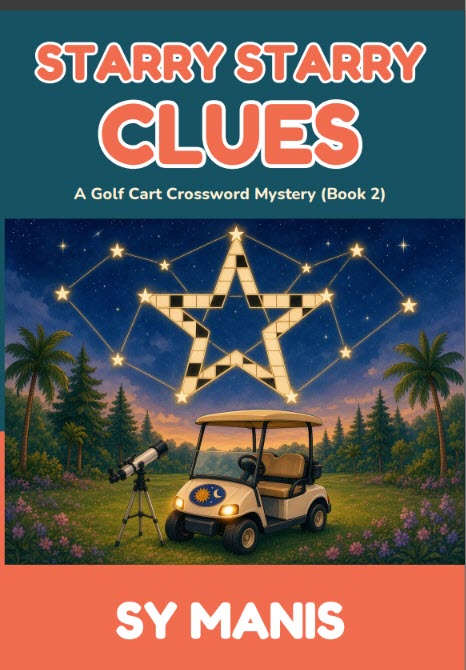
The first two books in the series are Down Means Dead and Starry Starry Clues. Both are available in paperback. They are written in a straightforward voice, set in a familiar kind of community, and designed so the story and the puzzles support each other.
If the goal is to keep reading and keep working the mind without turning either one into a project, these are a simple way to do both at once. The books are on the shop page if you want to look at them.
Sources include National Geographic (Yale longevity study), The Guardian / Rush University cognitive enrichment research, and NEJM Evidence crossword trial in mild cognitive impairment.
← Back to News